Introduction
At Method, we take our Mission, Vision, and Core Values (MVV’s) seriously. They’re not just content on our website, or something to read once when you join the company. They’re not just lofty platitudes — they’re meant to have practical application to your day-to-day.
For Method to maximize our potential, for Method to be the best partner to our carriers, for Method to be exceptional for each of our customers — for all these things — everyone at Method needs to make this Our Method. The mission is ours, the vision is ours, and the core values are ours. It’s our collective responsibility to endeavor every day to live up to them.
So, this guide is meant to serve as a practical tool that you can leverage to ensure that the words you say and the actions you take are in service of our mission, drive us toward our vision, and exemplify our core values.
Remember that the following is a synthesis of all of your contributions. A reflection not only of where we are today, but where we want to be in the future. As such, this guide can help you better understand what your teammates think and value.
Lastly, look to this guide for tangible ideas to encourage champions of our culture, and strategies to address the inevitable challenges that undermine our MVV’s.
Thanks for taking the time to review Our Method. I hope that you find it as helpful a tool as I have.

 Christopher Rehm, M.D.
CEO
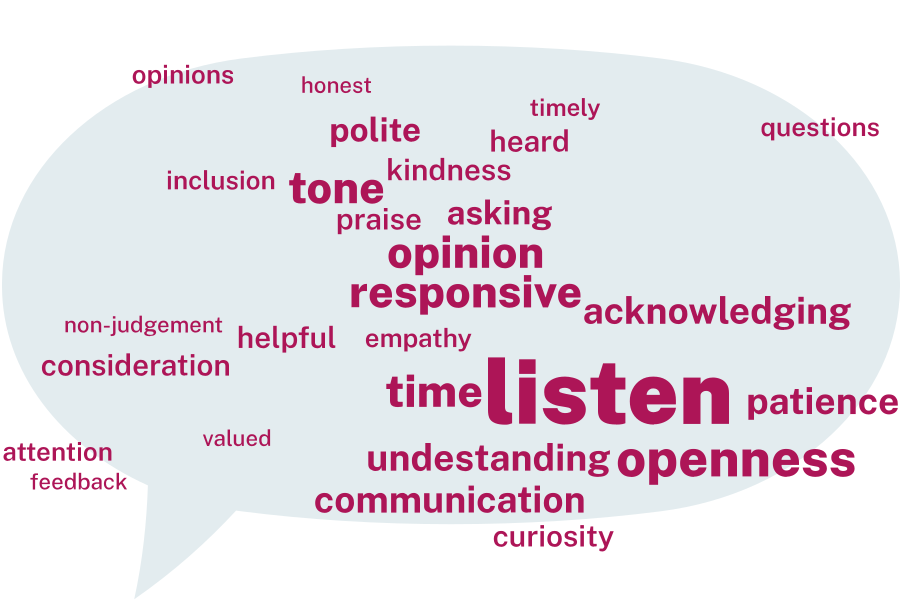
At Method, we visualize RESPECT as
We establish RESPECT by
- Taking time to listen, ask questions and understand someone’s point of view.
- Being open to, encouraging and valuing new ideas, opinions and processes. Making it safe to speak up.
- Allowing people to speak freely and be fully heard.
- Providing regular, open communication, especially from management.
- Being prompt and responsive to deadlines, requests and work products.
- Showing gratitude, appreciation and recognition of others.
- Going directly to the individual to discuss a concern instead of escalating.
- Publicly praising and privately correcting.
- Admitting mistakes and treating them as learning opportunities rather than outright failures.
- Assuming positive intent from others when we receive comments, feedback, questions or actions we do not fully understand.
- Asking for input from others when making decisions, creating processes or making a change.
- Seeking to understand other people’s needs.
- Offering to help others, even when not requested.
- Being mindful of body language and tone of voice. Eye contact conveys attentiveness, and speaking calmly conveys openness.
- Using manners and courtesy in simple ways – greeting others, saying "please" and "thank you" "good morning" when you start the day, "have a good evening" when you end the day.
When someone expresses their opinion or point of view, how can you be sure you’ve fully heard them?
How can you more routinely show gratitude and appreciation of other team members?
We see DISRESPECT as:
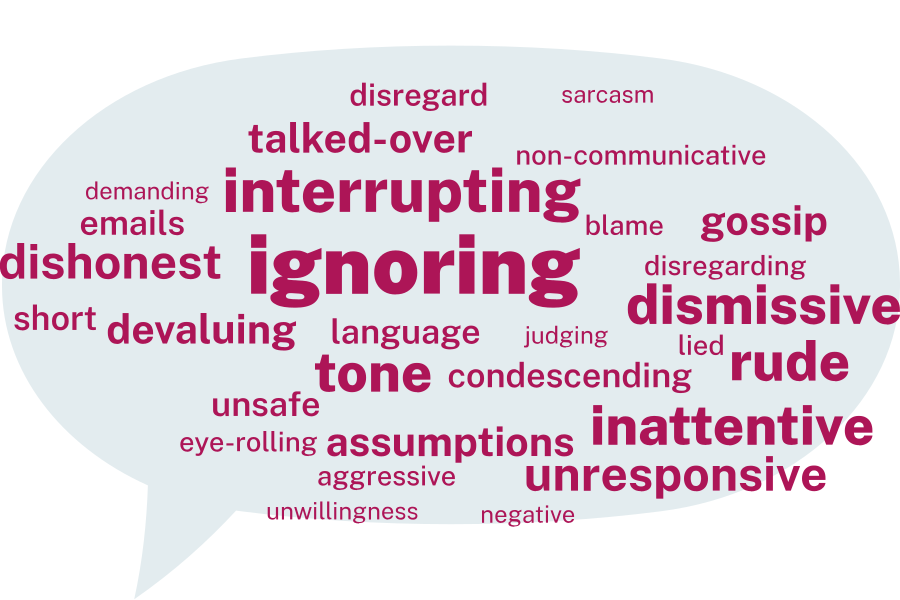
- Ignoring and unresponsive to calls, emails and other communications.
- Interrupting another person and talking over them.
- Being dishonest.
- Rude, dismissive or condescending tone of voice and body language.
- Gossiping in any form.
- Blaming others.
- Dismissing other’s opinions and ideas.
- Micro-management.
- Lack of concern for another person’s time or boundaries.
- Impatience and short-tempered reactions. Lack of emotional control.
- Excessive or unnecessary escalation of issues.
- Ignoring rules and processes that have been established.
- Making assumptions about others instead of seeking to understand first.
- Presuming ill intent from others when we receive critical or opposing comments, feedback, questions or actions.
- Lack of ownership of mistakes; lack of apologizing.
How do you respond to criticism or opinions that differ from your own?
What can you do to constructively address an instance when you personally experience or witness another person being interrupted or talked over?
What is the best thing to do when you are in the presence of gossip?
Learn about trust
Back to overview
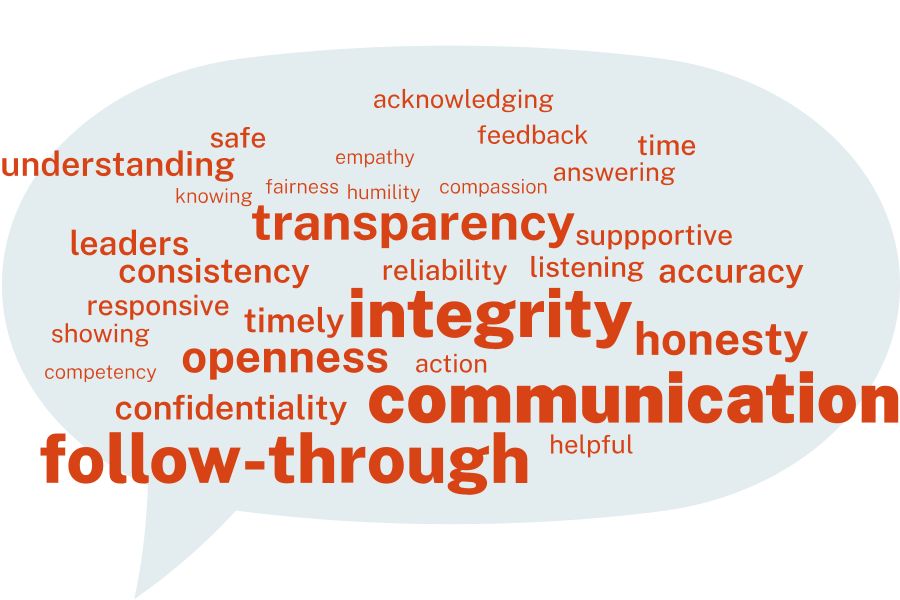
At Method, our idea of TRUST looks like:
We build TRUST by:
- Following through and doing what we say we will do. Integrity.
- Keeping commitments and promises.
- Transparent, regular, open communication across the company and with customers.
- Being responsive to requests, deadlines and the needs of others.
- Listening to and understanding other’s opinions and needs.
- Offering help, even without being asked.
- Consistency in behavior over time; being reliable.
- Being knowledgeable and competent in our work.
- Meeting deadlines and being accurate in our work.
- Showing empathy, vulnerability, compassion and understanding.
- Honesty.
- Humility; acknowledging areas where we ourselves struggle and ask for help.
- Acknowledging our own mistakes and taking them as opportunities for improvement.
- Making time for another person’s questions, comments or ideas.
- Maintaining confidentiality and privacy.
- Creating a safe environment when others express opinions, suggestions or concerns.
- Being aware of and having concern for people’s lives outside of work.
- Giving and receiving feedback aimed towards improvement.
What is one way you can more openly and regularly communicate with your team? What is one way you can support others to communicate openly?
Are you clear on what others expect of you? How do you know?
We LOSE TRUST because of:
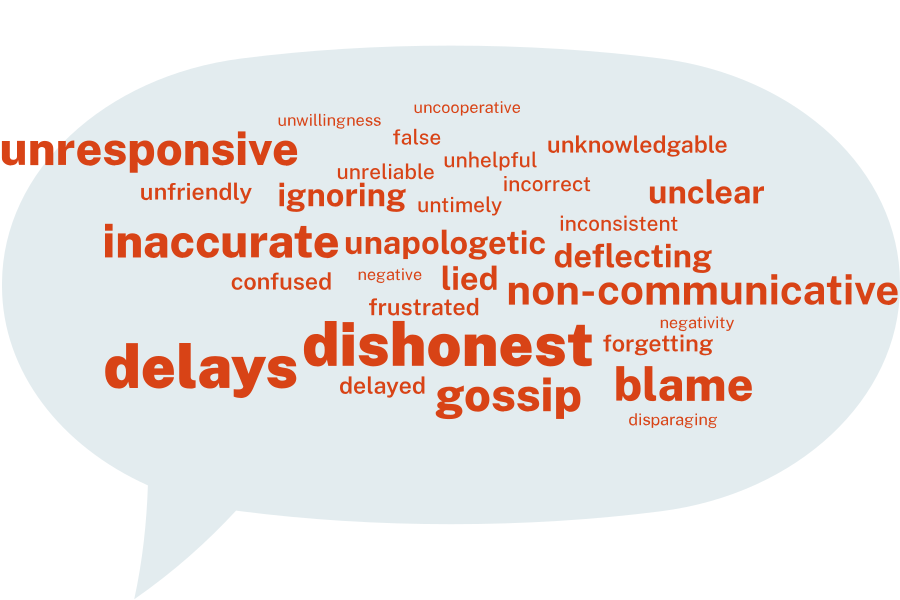
- Being inconsistent between what we say and what we do.
- Acting against company values.
- Unresponsiveness, delays, lack of follow-through and not meeting deadlines.
- Not owning up to mistakes.
- Gossip.
- Blaming, disparaging others or acting on assumptions.
- Dismissing other’s ideas, opinions, questions or feedback.
- Inaccuracies; providing incorrect information.
- Failing to communicate regularly and openly.
- Deflecting responsibilities and passing the buck.
- Negativity and presuming negative intent from others.
- Breaches of confidentiality and privacy.
- Not offering help; not supporting the needs of the team.
- Conflict avoidance and failing to deal with known problems.
- Lack of clarity regarding expectations or responsibilities.
- Favoritism.
What resources, training, redesign or support do you or your team need to minimize delays in accomplishing your work?
How will you seek feedback about the alignment between your words and your actions?
Learn about caring
Back to respect
At Method, we believe CARING is:
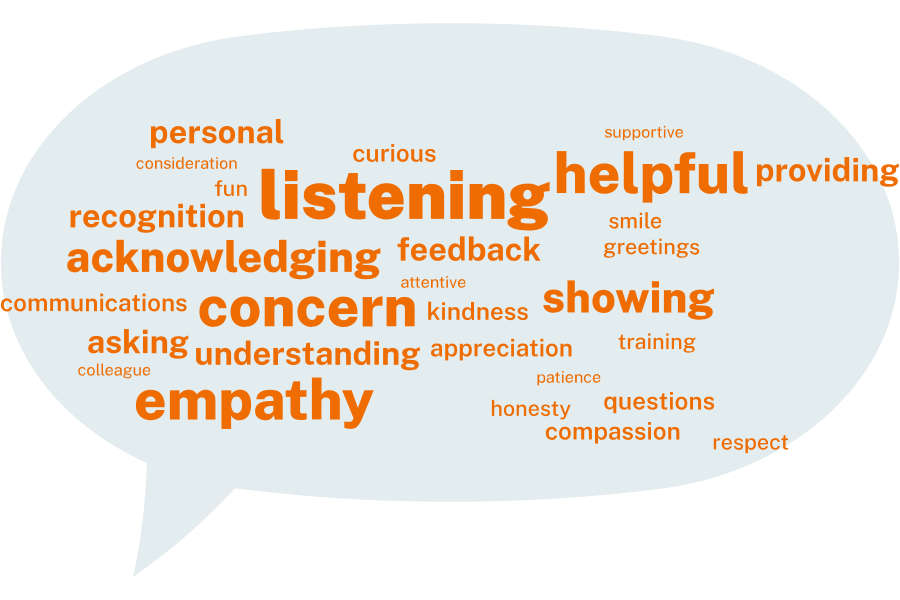
We demonstrate CARING by:
- Making time to listen, with the intent to fully understand.
- Being genuinely concerned for others’ well-being inside and outside of work.
- Asking questions and being curious about others’ opinions and situation.
- Offering help and rolling up your sleeves, particularly when another person is struggling.
- Acknowledging and appreciating the value and contributions of others, especially in public.
- Taking everyone ideas into consideration.
- Getting to know people on a personal level, remembering the little things, and supporting each other in and out of the office.
- Being kind.
- Patience.
- Walking in an office in the morning just say "good morning"; do the same thing for remote workers.
- Paying compliments.
- Encouragement, positivity, and expressing confidence in others.
- Investing in training, mentoring and professional development.
- Making social time for the team, having fun and celebrating.
What is the number one action you can start taking to become a better listener?
What small thing will you remember and recognize about each of your team members moving forward?
How will you know when your team members could really use your help?
An UNCARING environment feels like:
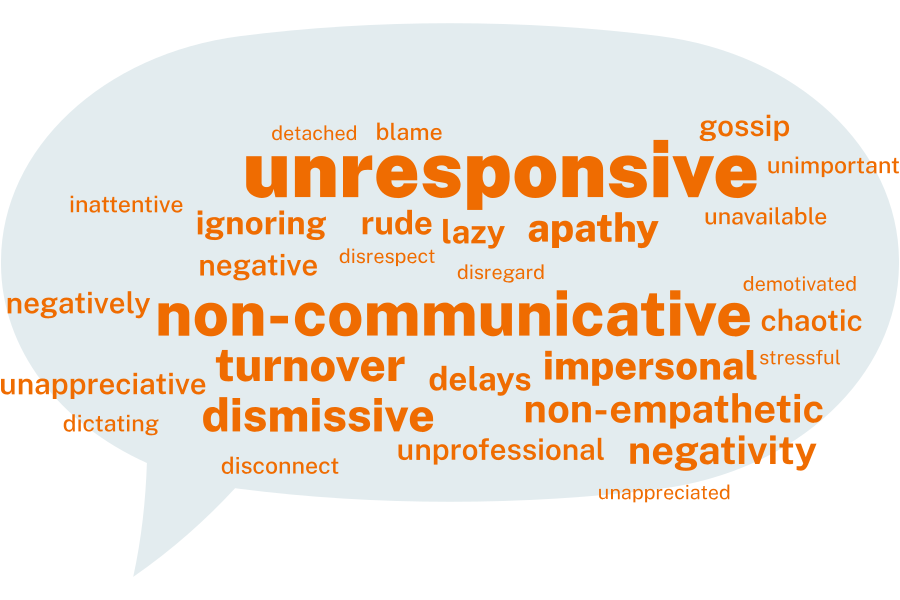
- Being unresponsive to calls, requests, follow up or bids for help.
- Lack of communication, transparency or feedback.
- Making interactions all about business; impersonal.
- Brushing off concerns; being dismissive to others.
- Rudeness.
- Apathy, lack of urgency, doing the bare minimum.
- Lack of empathy for others.
- Negativity.
- Sarcasm.
- Blaming other people.
- Gossiping.
- Lack of appreciation or recognition for contributions.
- Having a chaotic or disorganized environment, planning or processes.
How can you be certain that you are responding in a timely fashion to questions, requests or follow through? How will you respond when you receive feedback that you have opportunity to improve?
What is a productive way to address moments when you believe your concerns or needs are being dismissed?
Learn about excellence
Back to trust
At Method, EXCELLENCE means:
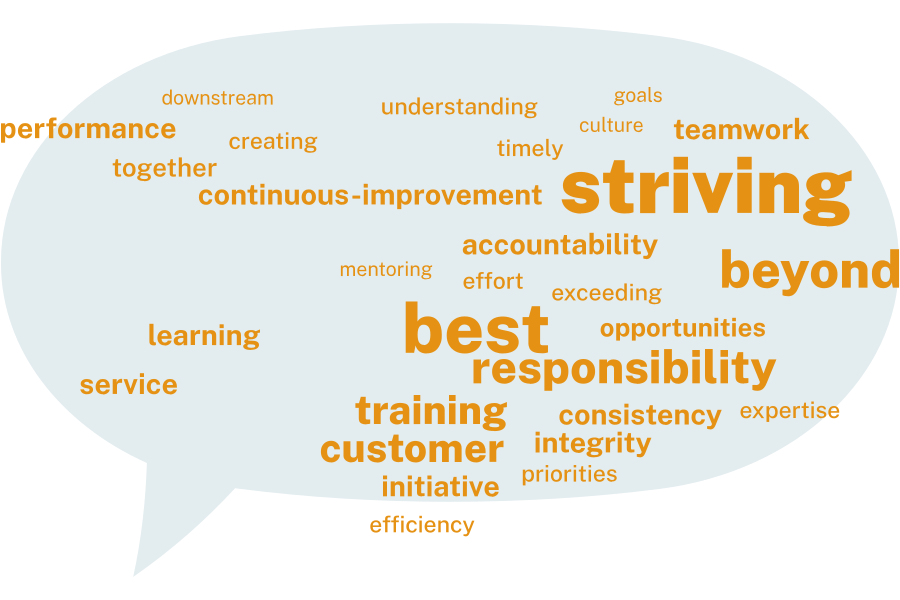
We pursue EXCELLENCE by:
- Striving to be better every day, continuously improving and putting forth our best effort.
- Accuracy in all that we do.
- Learning from mistakes and sharing those learnings openly.
- Not being satisfied with the status quo; going above and beyond the basics; exceeding expectations.
- Working together, as teams and colleagues that understand we are all interdependent. Relationships across teams.
- Creating efficiencies throughout the company.
- Creating proactive solutions.
- Maintaining consistency where consistency is needed.
- Challenging ourselves and others to grow and improve.
- Holding ourselves and others accountable.
- Training, cross-training and professional development to broaden our capabilities and flexibility.
- Leaning in to help, even when not asked.
- Bringing expertise to our roles.
- Communication that is open, honest and transparent.
- Collaborating with others, valuing differences and taking advantage of others’ experience and expertise.
- Openly sharing feedback, knowledge and information.
What is one skill or ability you would like to develop or improve personally?
In what way can your team function more cohesively and/or collaborate more deeply with other teams?
Things that UNDERMINE EXCELLENCE are:
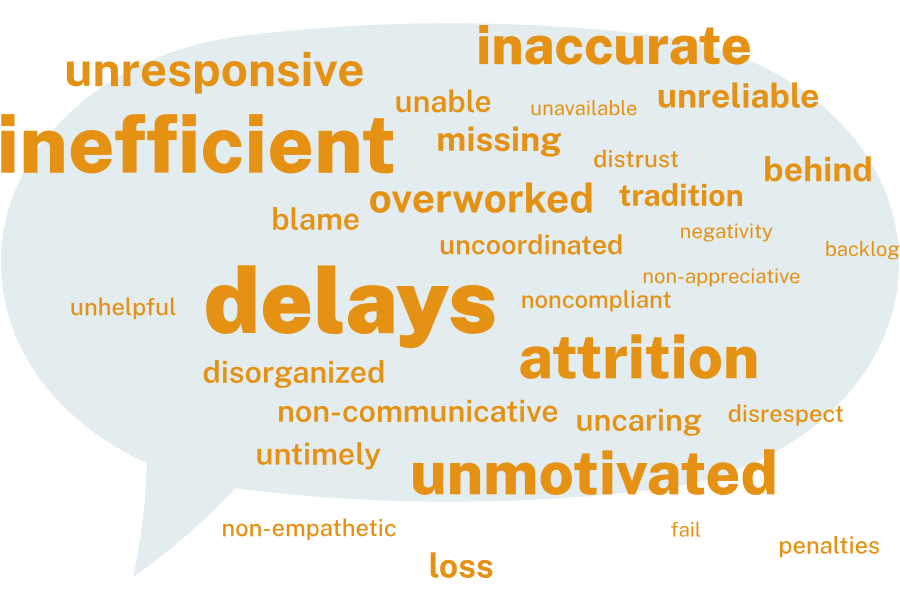
- Delays
- Re-work
- Not speaking up
- Doing things because they have always been done that way; complacency; outdated traditions and "the old ways"
- Inaccuracies
- Inefficiencies
- Breaches of confidentiality
- Not fulfilling agreements
- Lack of follow up
- Noncompliance
- Disorganized processes, teamwork or communication
- When others take credit for your work
- Lack of feedback to improve
- Lacking tools or information to be successful
- Negativity
- Attrition of customers or employees
- Lack of collaboration with others; lack of interdependence
- When we do not coordinate our efforts or are misaligned on goals
What is a constructive, solutions-oriented way to approach a team member if you are experiencing delays or setbacks?
What is one process you see greatest opportunity to create greater efficiencies? What can you personally do to support this effort?
Learn how our values shape our culture
Back to caring

OurCulture
Overview
Understanding How Culture is Shaped by Values
Culture makes an enormous impact on our company’s performance, whether it is measured by employee turnover, client retention, profitability, growth, outcomes, efficiencies or reputation.
Culture is a force to be reckoned with — it is resilient, and difficult to change without consistent intentional effort. While not easy, culture can be purposefully "engineered" to a desired result. Four factors contribute to a healthy culture:
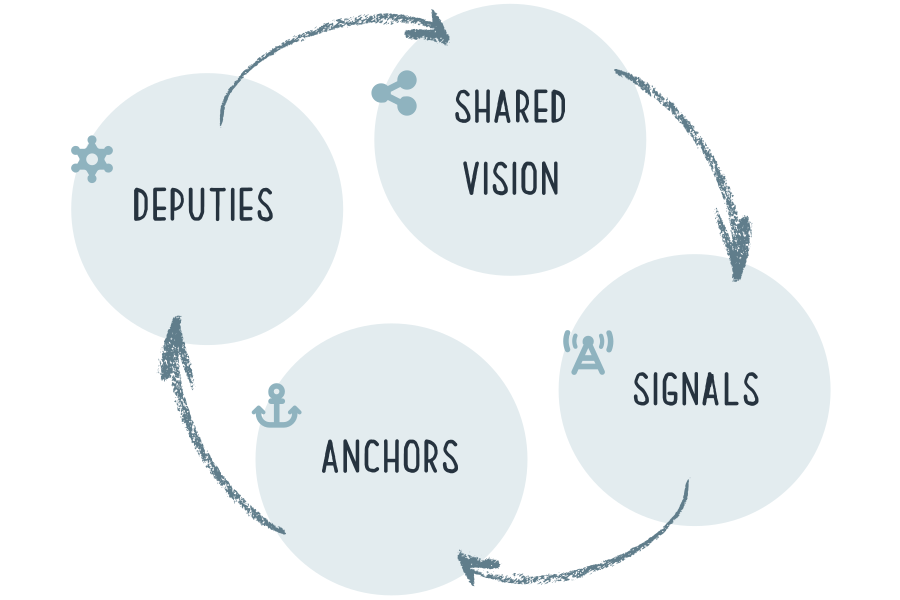
Shared Vision
Culture change must begin by everyone sharing the same picture of what the desired culture looks like. It’s hard to work towards something if the goal is unclear. A desired culture is shaped by the core values of the organization. It is made real through dedicated, intentional conversations amongst employees about what those values mean and how they play out in daily life. What beliefs and behaviors tell us we are living our values? What attitudes and actions tell us we are acting against our values? Once we can confidently answer those questions, we have our foundation to start shaping the culture we desire.
Signals
The momentum for culture change is largely a leader-driven phenomenon. In the absence of top leaders engaging in continuous "signals" to employees, culture is unlikely to change. Signals are observable behaviors by leaders that demonstrate how to act and what is important. They reflect a leader’s beliefs and have a profound effect on those around them.
Examples
- Actions that reflect (or go against) company values
- Who leaders choose to spend time with
- What leaders recognize with positive feedback
- What/who leaders reward
- What leaders mention as opportunities for improvement
- How leaders spend their own time
- Deciding who is a hero and who is worthy of telling stories about
- Making clear what leaders DON’T accept or tolerate
Anchors
Anchors are the means by which signals are embedded into the workplace, through systems, processes and practices. Think of anchoring as hardwiring the desired culture into the organization by making anchors "the way we do things around here."
Examples
- Who and how we recruit
- How we conduct orientation
- What and how we perform training
- Performance feedback and reviews
- Compensation, rewards & recognition
- Structure of meetings
- Protocols
- Town hall agendas
- Reporting and data
- Budgeting process and resource allocation
- Socialization
- Diversity and inclusion
- Promotions
Deputies
A loose definition of culture is "what happens when nobody is looking or when the boss isn’t around." Culture is the sum total of attitudes, beliefs and behaviors of all employees. As such, all employees are partners in supporting a desired culture. The responsibility for nurturing, reinforcing and protecting the desired culture belongs to everyone.
Empowering or "deputizing" employees to be agents of the culture establishes informal leadership expectations. An empowering conversation from a leader to the team might sound like this:
I know the culture of our group and the entire company is very important to all of you. We’ve been working on our mission, vision and core values for some time. All that work is to lay the foundation for our culture, which is putting our values to work every day. Culture needs to be top-down, bottom-up and across the company. This means we all own the culture, we’re all responsible for it. In practical terms, if I see behaviors that are great for our culture I’ll recognize them. I’m asking you to do the same. Recognize each other. If I see things that concern me about working against the culture, I’ll have a private conversation about it. I’m asking you to do the same. Give constructive feedback to each other. I want to empower all of you to be deputies of a strong Method culture, which means holding ourselves and each other accountable. That includes me!



 © 2024 Method Insurance LLC. All rights reserved. For internal use only. Do not distribute.